
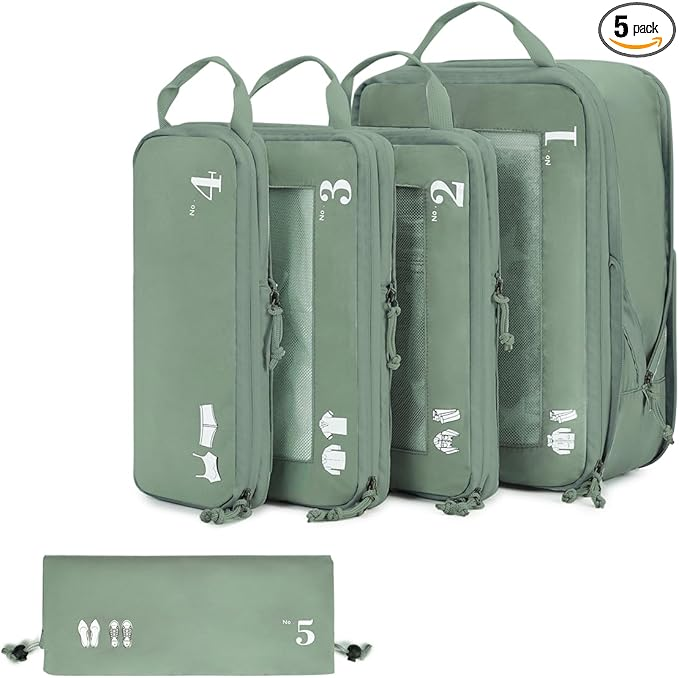
ECOHUB 5 Set Compression Packing Cubes for Suitcases
Introduction
Struggling to zip an overstuffed suitcase or constantly digging through a messy bag for one shirt? You’re not alone — packing wastes time and space unless you use the right tools. ECOHUB Compression Packing Cubes offer a simple, effective way to pack smarter: they organize your items, compress clothing to free up space, and make unpacking faster.
In this guide, you’ll learn how to use ECOHUB’s 5-piece set to:
- Save space in your suitcase and fit more into a carry-on,
- Keep clothing and accessories organized with easy-to-transfer cubes,
- Cut packing time and avoid wrinkles on short trips and longer travels.
Quick example: with compression cubes you can often fit shoes or souvenirs in a carry-on that would otherwise be full — giving you more flexibility (and fewer checked-bag fees).
1. What Are Compression Packing Cubes?
Packing cubes separate and organize clothing; compression packing cubes go a step further by actively reducing the volume of what’s inside. Most compression cubes use a dual-zipper design: you pack the cube, close the main zipper, then use a second compression zipper to squeeze out excess air and flatten the contents. That extra compression is what lets you fit more into the same suitcase or bag.
The ECOHUB 5-Set Compression Packing Cubes combines multiple sizes and a shoe bag in a single cube set, using lightweight, durable materials designed for repeated travel use. Many travelers report significant space savings when switching from regular packing cubes to compression cubes — a practical advantage whether you’re trying to avoid checked luggage or simply want a neater carry-on.
2. Step 1: Sort & Categorize Your Items
The quickest way to pack more and stress less is to sort first, then pack. Instead of tossing everything into your suitcase, group items by purpose and assign them to a cube — it saves space and makes unpacking fast.
- Large cube — Jeans, jackets, sweaters. Why: bulky items create gaps; grouping them keeps volume predictable and reduces wasted space.
- Medium cube — Shirts, blouses, skirts. Why: mid‑weight items compress well and are easy to layer inside a cube for even compression.
- Small cube — Socks, underwear, accessories. Why: small items fill voids and stabilize larger pieces, preventing shifting in your suitcase.
- Shoe bag — Sneakers, sandals, or heels. Why: isolates dirt and odors from clean clothing and saves internal suitcase space when placed along the edges.
- Extra cube — Toiletries (in a leakproof pouch), workout gear, or tech accessories. Why: keeps fragile or liquid items separate and easy to locate.
Actionable packing lists (sample):
- Carry‑on weekend: 3 tops + 2 bottoms + underwear/socks = medium cube + small cube; leave room in the bag for a shoe bag or souvenir.
- Business trip: 2 blouses/shirts + 1 blazer + 2 bottoms = medium + large cube; use the shoe bag for one pair of shoes to protect shirts.
Practical tips:
- Label or color‑code cubes (use a small sticker or luggage tag) so each family member or trip type has its own cube.
- Use the mesh tops to check contents at a glance before you zip the suitcase.
- Try sorting before you roll — a 5‑minute sort often saves 10+ minutes of repacking later.
3. Step 2: Roll vs. Fold – Which Works Best?
Rolling saves space because it reduces layers and aligns fabric fibers, letting more items fit into each cube. Rolled tees, pajamas, and workout clothes take up less volume and are less likely to shift inside a compression cube — a reliable technique for casual clothing and lightweight fabrics.
Folding still has advantages for structured garments. Button‑down shirts, blazers, and trousers keep a neater silhouette when folded, which helps prevent unsightly creases when you arrive. ECOHUB compression packing cubes support both methods: compressing a folded stack keeps edges flat, while compressed rolls create dense, wrinkle‑resistant bundles.
Quick comparison — Roll vs. Fold
- Roll: Pros — maximizes space, good for cotton tees and knits; Cons — not ideal for stiff collars or tailored pieces.
- Fold: Pros — preserves structure for dress shirts and trousers; Cons — can waste space if not stacked and compressed properly.
Packing order inside a cube: heavy items (jeans, sweaters) on the bottom, rolled tees and underwear in the middle, delicate or folded items on top so the compression zipper flattens evenly.
Fabric-specific tips: roll cotton and synthetic tees; fold linen and dress shirts with a thin tissue or packing folder to protect collars; for delicate fabrics, place them in the mesh top of a cube or between rolled items.
Pro Tip: Do a quick test pack before your trip: pack one cube using your preferred mix of rolling and folding, compress it, then open it to judge wrinkle levels and adjust for the next trip.
4. Step 3: Compress to Save Space
This is the compression step that turns organized packing into real space savings. Fill a cube, zip it closed, then engage the second compression zipper to tighten the bag and push out excess air — the cube slims down and the contents become denser, letting you fit more into the same suitcase or carry-on.
Simple 3-step compress routine:
- Fill: Pack each cube with sorted items (see Step 1). Don’t overstuff — leave a little room so fabric layers can shift and compress evenly.
- Zip: Close the main zipper to secure contents.
- Compress: Run the compression zipper to reduce volume, flattening the stack so the cube takes up less luggage space.
Many travelers report noticeable gains in usable luggage space after switching from regular packing cubes to compression packing cubes — some fitting an extra few outfits or creating room for souvenirs and extra shoes. If you don’t have lab measurements for percentage savings, present this as user feedback (e.g., “travelers report” or “user-tested packs”).
Practical examples of using freed space:
- Keep an extra pair of shoes or a lightweight jacket in the freed space to avoid checked-bag fees.
- Use extra room for souvenirs on the return trip rather than paying for another bag.
- Fit everything into a carry-on for short trips, saving time at check-in and baggage claim.
Trust tip: Do a quick test pack at home: pack one cube as you normally would, compress it, then compare the compressed cube to your uncompressed pile to see the difference. If you track packing time, you’ll often find compression cuts repacking and rearranging time — a real time saver on busy travel days.
5. Step 4: Use the Extra Features to Stay Organized
ECOHUB’s design goes beyond just squeezing down volume — the small details make daily travel easier. The cubes feature mesh tops so you can identify contents at a glance, and sturdy handles that let you lift a compressed cube straight out of your suitcase and drop it into a hotel drawer without unpacking the whole bag.
- Mesh top — Benefit: Quickly see what’s inside. Tip: Store delicate items or your most-used shirts near the mesh top so you can confirm contents without opening the cube.
- Sturdy handles — Benefit: Fast transfer from luggage to dresser. Tip: Use the handle to pull a single person’s cube from a shared suitcase on family trips.
- Shoe bag — Benefit: Keeps footwear and dirt separate from clothing. Tip: Place the shoe bag along the suitcase edge or under compressed cubes to make efficient use of space.
How to use cubes when you arrive: leave compressed cubes in the bag or simply place them—still zipped—into drawers; the mesh top and handles make it easy to stage outfits without fully unpacking. For business travelers, move a compressed cube directly into a hotel closet or drawer to keep suits and blouses organized. For families, assign each person a color or label on the cube for fast identification during multi-trip packing.
Material and durability notes: ECOHUB uses lightweight, travel-grade fabrics and reinforced zippers for repeated use. If durability is a top concern, compare specs against other popular options like Eagle Creek Pack-It series or Peak Design’s packing solutions before purchase — look at zipper type, denier of fabric, and user reviews for real-world wear data.
6. Real-Life Travel Scenarios
Compression packing cubes aren’t just for neat freaks — they solve real problems on real trips. Below are practical mini-plans that show how ECOHUB cubes can save space, time, and hassle for common travel types.
- Weekend Getaway
- Plan: 3–4 outfits, one pair of shoes, toiletries.
- Cube use: 1 medium cube for tops, 1 small cube for underwear/socks, shoe bag for footwear.
- Why it works: Compression lets you fit these into most 20–22L carry-ons with room left for toiletries or a small souvenir.
- Pro tip: Pack outfits by day into each cube (Day 1 outfit, Day 2 outfit) to speed morning routines.
- Business Travel
- Plan: 2–3 work outfits, one blazer, casual clothes for downtime.
- Cube use: 1 large cube for blazers and trousers (folded), 1 medium cube for shirts/blouses (folded or lightly rolled), shoe bag for dress shoes.
- Why it works: Keeps dress clothes separated and compressed so suits and blouses arrive with fewer wrinkles; quick transfer to hotel drawers saves prep time before meetings.
- Pro tip: Place dress shirts on top of folded stacks and use the mesh top to confirm contents at a glance.
- Family Vacation
- Plan: Multiple travelers, mixed clothing types, extra gear for kids.
- Cube use: Assign a cube (or color) per person — large for adults’ bulkier items, small for kids’ socks/underwear, shoe bag per family member if space allows.
- Why it works: Individual cubes make packing/unpacking fast and reduce morning chaos; parents can pull a single kid’s cube without digging through one large bag.
- Pro tip: Label cubes with names or stickers and stash a “day 1” outfit on top for each child.
Other trip ideas:
- Backpacking / Travel backpacks: Use compressible cubes to organize gear inside a backpack and separate clean clothes from dirty items.
- Weekend to long trips: Scale cube use — a full cube set works well for a week, while 1–2 cubes are perfect for short trips.
Comparison note: if you’re used to regular packing cubes (like some Eagle Creek Pack-It models), compression cubes add an extra layer of space efficiency — consider which approach fits your travel style and gear needs.
7. Final Verdict – Why ECOHUB Is a Smart Travel Investment
When you add up saved time, reduced luggage bulk, and the stress-free organization that comes from systematic packing, ECOHUB Compression Packing Cubes do more than tidy a suitcase — they change how you travel. For frequent flyers, weekend trippers, and families, a reliable cube set can cut packing and unpacking time, help avoid checked‑bag fees, and keep clothing easier to manage on the road.
Key strengths of the ECOHUB 5‑set:
- Compression that creates usable space: Compressing packed cubes reduces bulk so you can fit more outfits or room for souvenirs without increasing suitcase size.
- Thoughtful features: Mesh tops, sturdy handles, and a dedicated shoe bag make the set practical for both business and leisure trips.
- Travel‑grade materials: Durable zippers and reinforced seams mean the cubes are built for repeated use — a good factor when comparing price and long‑term value against other options.
Who should buy these cubes?
- Frequent travelers: Save time and suitcase space on repeated trips.
- Weekend travelers: Fit more into a carry‑on and skip checked baggage.
- Families: Keep each person’s items separate and quick to find during busy vacations.
Price and value note: consider the ECOHUB set as an investment in more efficient travel — compare the price of a quality cube set against potential savings from avoiding checked luggage, reduced packing time, and less wear on clothes. If you’re comparing brands, look at Eagle Creek Pack‑It lines and Peak Design packing solutions for material specs, zipper types, and customer reviews to determine the best compression cube set for your needs.
Conclusion
Maximizing luggage space doesn’t have to be complicated. With the ECOHUB 5-Set Compression Packing Cubes, you can turn chaotic suitcases into organized systems that free up room for souvenirs, cut packing time, and make travel less stressful — whether it’s a business trip, a weekend getaway, or a family vacation.
Quick buying tips:
- Check the set contents and sizes to make sure they match your luggage and clothing needs (large, medium, small + shoe bag are common configurations).
- Compare materials and zipper quality if durability matters — look at user reviews and specs when weighing price vs. long‑term value.
- If you already own regular packing cubes (or a Pack‑It style system from Eagle Creek or Peak Design), decide whether added compression is worth the switch for your trips and backpacks.
👉 Ready to pack smarter? Check out ECOHUB Compression Packing Cubes here and make your next trip your most organized yet. (Affiliate link disclosure: this link may earn a commission at no extra cost to you.)
Quick FAQ
- Will these fit in a checked bag? Yes — they’re designed to work in carry‑ons and checked luggage alike.
- Do compression cubes damage clothes? No — when packed correctly (don’t overstuff) compression primarily removes air and compacts items without crushing fabrics.
